Book An Appointment
Sat - Thu: 11:00 AM - 11:00 PM
Friday: Closed
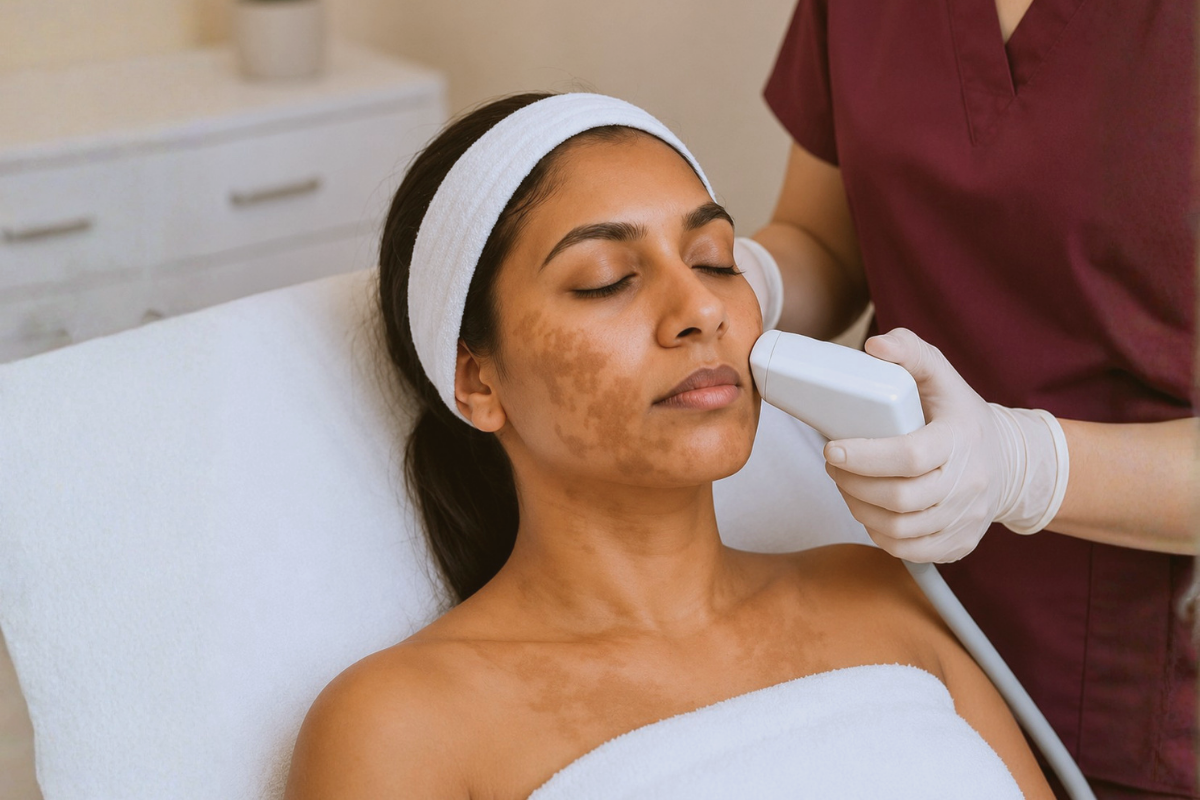
Pigmentation can show up as dark marks, uneven patches or areas of discolouration that keep returning despite skincare or previous treatments.
At Dr. Dalia Siddig Medical Center in Al Majaz, Sharjah, pigmentation care starts by identifying the type of pigmentation, possible triggers and how your skin is responding.
The goal is to choose treatment based on the cause, not just the colour you can see.
Pigmentation happens when certain areas of the skin produce or retain more melanin than the surrounding skin.
It may appear as:
Different types of pigmentation can look similar, but they may need very different treatment approaches.
You may benefit from a dermatology consultation if:
A dermatologist can help identify what type of pigmentation is present before recommending care.
Your dermatologist asks when the pigmentation started, whether it followed acne, sun exposure, pregnancy, irritation or another trigger.
The pattern, colour and location of the pigmentation are examined along with your skin tone and overall skin condition.
Your current products, prescription creams and previous treatments are reviewed to identify what may be helping or irritating your skin.
Care may include topical treatment, skincare changes, sun protection, prescription options or selected in-clinic procedures.
Pigmentation often improves gradually, so progress and skin tolerance are reviewed over time.
Flat dark marks can remain after acne has settled. These are different from textural acne scars.
Usually appears as broader patches of pigmentation, often on the face, and can be influenced by sun exposure and hormonal factors.
Darkening can develop after irritation, inflammation or certain skin procedures, particularly in pigmentation-prone skin.
Professional pigmentation management can help:
Pigmentation is evaluated medically before skincare products or procedures are selected.
Treatment strength, irritation risk and the chance of post-inflammatory pigmentation are considered when planning care.
If acne, irritation or another ongoing skin problem is creating new dark marks, that concern is addressed too.
Treatment can include prescription skincare, sun protection and selected procedures where appropriate.
Dr. Dalia Siddig Medical Center is located in Al Majaz 1, Sharjah, with clinic hours from 11:00 AM to 11:00 PM on operating days.
Pigmentation can develop for several reasons, including acne, inflammation, sun exposure, hormonal changes and certain skin conditions such as melasma.
No. Flat dark marks are usually related to pigmentation, while acne scars involve changes in skin texture.
Yes. Some conditions, particularly melasma, can recur and may need maintenance care and consistent sun protection.
Yes. Daily sun protection is an important part of managing many pigmentation concerns and helping reduce further darkening.
Laser may be suitable for selected pigmentation concerns, but it is not the right option for everyone. Skin tone, diagnosis and risk of further pigmentation need to be considered first.
It varies. Some marks improve over several months, while deeper or recurring pigmentation may take longer.


Dental implants, cosmetic dentistry, dermatology, and laser treatments in Al Majaz, Sharjah. Expert care at Dr. Dalia Siddig Medical Center.
Copyright © 2026 @ Dr Dalia Siddig Medical Center | Designed & Developed By MediGrow.ae